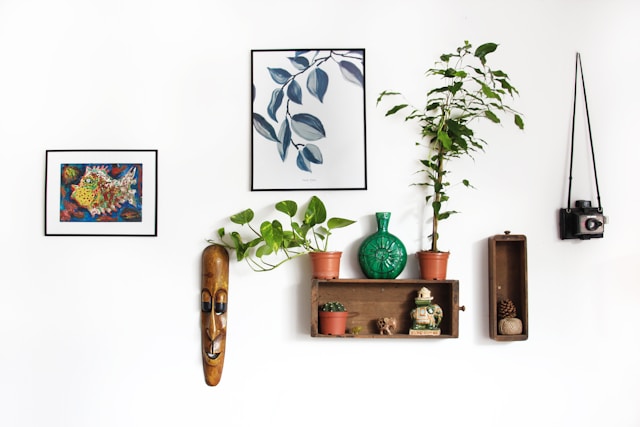
In the pursuit of interior excellence, we often focus on the “horizontal plane”—the layout of our sofas, the expanse of our rugs, and the surface area of our tables. However, a room truly comes to life when we begin to consider its “verticality.” Vertical accents, such as tall, slender vases and slim sculptures, act as the exclamation points of interior design. They draw the eye upward, create a sense of grandeur in rooms with low ceilings, and provide a sophisticated structural contrast to the heavy, horizontal blocks of traditional furniture. By mastering the use of height, you can transform a stagnant corner into a dynamic gallery space.
The Architectural Logic of the Vertical Line
The human eye is naturally drawn to height. In architecture, vertical lines symbolize strength, stability, and aspiration. When you introduce a tall, slim object into a room, you are essentially guiding the viewer’s gaze on a journey from the floor to the ceiling. This is particularly effective in small-scale living or “AdSense-friendly” minimalist homes where every decorative choice must be intentional.
A vertical accent serves as a visual “break.” In a room filled with low-profile furniture—like a mid-century modern credenza or a low-slung sectional—the space above the furniture can often feel empty or “dead.” A tall vase or a thin, elongated sculpture fills this void without occupying significant floor or surface area. This allows you to add drama and personality without making the room feel crowded or cluttered.
Tall Vases: More Than Just Vessels for Flowers
A tall vase is one of the most versatile tools in a decorator’s arsenal. While its primary function may be to hold botanical elements, its silhouette is what provides the real design value. When choosing a tall vase, consider its “form” as much as its “finish.” A cylindrical floor vase in a matte charcoal finish adds a modern, industrial edge, while a tapered glass vase provides a sense of airy elegance.
The beauty of a tall vase lies in its ability to support “oversized” natural elements. Instead of a standard bouquet, think of long, structural branches—such as dried Eucalyptus, pussy willow, or cherry blossoms. These elements extend the height of the vase even further, reaching toward the ceiling and creating a “living sculpture.” This approach is far more impactful than a series of small, scattered trinkets. It provides a singular, high-impact focal point that defines the energy of the entire room.
Slim Sculptures: Adding Art Without the Bulk
Sculpture is often perceived as a luxury reserved for large galleries, but “slim” sculptures are perfectly suited for modern residential life. These pieces—often made of bronze, iron, carved wood, or resin—focus on the “vertical axis.” Because they have a small footprint (the amount of space they take up on a surface), they can be placed on narrow mantels, slim console tables, or even in tight corners that wouldn’t accommodate a traditional piece of art.
A slim sculpture acts as a “silent companion” in a room. It adds a layer of intellectual depth and artistic flair. When selecting a piece, look for interesting silhouettes that create a compelling shadow. In a minimalist room, a thin, abstract metal sculpture can act as a bridge between the “hard” lines of the architecture and the “soft” textures of the decor. It provides a sense of curated sophistication that makes the space feel more expensive and well-thought-out.
Strategic Placement: Finding the “Vertical Opportunities”
To maximize the impact of vertical accents, you must identify the “gaps” in your room’s skyline. One of the best places for a tall accent is beside a media console or a fireplace. These areas often have “empty corners” that feel disconnected from the rest of the room. A tall floor vase provides a vertical “bookend” that frames the central feature and anchors it to the wall.
Another “vertical opportunity” is the entryway. Entryways are often narrow, leaving little room for bulky furniture. A slim, tall sculpture placed on a narrow pedestal or a slender vase on a console table creates an immediate sense of “arrival.” It signals to guests that they are entering a space where design is prioritized. In bedrooms, placing a tall vase in a corner can soften the sharp angles of the room and provide a sense of serenity and height that makes the ceiling feel loftier.
Mixing Materials for Textural Contrast
Just as with textiles, the success of vertical accents depends on the mix of materials. If your room is dominated by soft fabrics and wooden furniture, a metallic or glass vertical accent will provide a necessary “pop” of contrast. A tall, hammered brass vase reflects light and adds a touch of warmth, while a slim stone sculpture provides a grounding, earthy presence.
Don’t be afraid to group vertical items, but remember the “rule of three” and the importance of varying heights. A group of three vases in the same material but different heights creates a rhythmic, harmonious display. This “staggered” look is more visually interesting than a single object and allows the eye to move across the arrangement in a fluid motion.
The Psychological Benefits of Height
There is a profound psychological shift that occurs when we surround ourselves with objects that draw our eyes upward. It promotes a sense of “openness” and reduces the feeling of being “boxed in.” In small apartments, this is essential for maintaining a positive mood. High-impact vertical accents act as a “release valve” for the room’s energy, pushing the boundaries of the space outward and upward.
Furthermore, these accents allow for a cleaner, more organized environment. By focusing on a few tall, high-impact pieces rather than many small ones, you reduce “visual noise.” This minimalism leads to a more peaceful, focused mind. It is the physical manifestation of the phrase “less is more,” proving that a few well-chosen vertical lines can do the work of a room full of furniture.
Maintaining Balance and Scale
While height is the goal, scale is the regulator. A vase that is too tall for a small table can look precarious and top-heavy. As a general rule, a vase or sculpture should not be more than 1.5 to 2 times the height of the surface it sits on, unless it is a floor-standing piece.
Consider the “visual weight” of the object as well. A very thin, wire-like sculpture can be quite tall without feeling overwhelming, whereas a solid, thick stone pillar of the same height would feel much “heavier” in the space. Balance these pieces with your existing furniture to ensure that the vertical accents enhance the room rather than dominating it.
The Longevity of the Vertical Statement
Trends in color and pattern may fade, but the elegance of a tall, slender silhouette is timeless. Investing in a high-quality tall vase or a timeless slim sculpture is a move toward a “forever” aesthetic. These pieces are easily moved from room to room and adapt to different styles as your tastes evolve.
In conclusion, “Vertical Accents” are about reclaiming the air space in your home. They are a celebration of height, form, and artistic intention. By incorporating these slender giants into your decor, you move beyond the “floor-bound” mentality and embrace a three-dimensional approach to design. Elevate your aesthetic, lift your gaze, and watch as your home reaches new heights of sophistication and style.