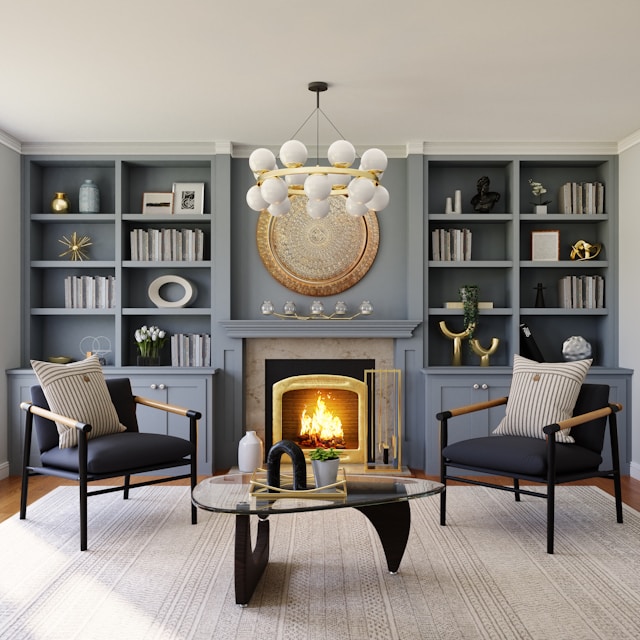
In the pursuit of a cozy home, there is a common misconception that “warmth” requires “weight.” We often imagine that to make a room feel inviting, we must fill it with oversized velvet sofas, heavy blackout curtains, and thick, shaggy rugs. However, in smaller living spaces or minimalist modern homes, this “heavy” approach leads to a feeling of tension and enclosure. The true secret to a comfortable, breathable home lies in the strategic mixing of textiles. By prioritizing texture over tension, you can create a space that feels soft, layered, and warm without sacrificing a single inch of perceived space.
The Concept of Visual Weight in Textiles
In interior design, every object has a “visual weight”—the amount of space it appears to take up in a room. A dark, chunky wool blanket draped over a chair has a high visual weight, making the chair look larger and the room feel more crowded. Conversely, a loosely woven linen throw provides the same sense of comfort but with a much lighter visual footprint.
The goal of mixing textiles is to create “sensory depth.” When a room has only one texture—such as a smooth leather sofa and a flat-weave rug—the eye slides right over the surfaces, making the environment feel cold and “plastic.” By introducing a variety of fabrics, you give the eye places to rest and the hands something to feel, which naturally generates a sense of psychological warmth.
Layering Natural Fibers for Breathable Comfort
The foundation of a “low-bulk” cozy home is the use of natural fibers. Materials like linen, cotton, and silk are excellent for layering because they are inherently thin but visually rich. Linen, in particular, is a designer favorite for small-scale statements. Its natural “slub” or slight irregularity in the weave adds an organic, lived-in feel that doesn’t require the volume of heavier fabrics.
Instead of one massive, thick comforter on a bed, try layering a thin cotton quilt with a lightweight linen duvet and a small waffle-knit throw at the foot. This “multi-layered” approach provides more warmth than a single heavy piece, but because the individual layers are thin, the bed doesn’t look like an oversized mountain in the middle of the room. This same principle applies to windows; a sheer linen curtain paired with a light-filtering cotton blind offers privacy and texture without the “suffocating” effect of heavy velvet drapes.
The Power of the Rug: Defining Space Without Walls
Rugs are perhaps the most influential textile in any room. They are the “anchor” that holds the furniture together. In a small apartment, a high-pile “shag” rug can actually make the floor space look smaller because the shadows between the long fibers create a busy, cluttered appearance.
To add warmth without the bulk, look toward low-profile textures like jute, sisal, or flat-woven wool. A jute rug provides a wonderful earthy texture and a neutral “canvas” that goes with any decor. If you find jute too rough for bare feet, you can use the “layering trick”: place a smaller, softer cotton or low-pile wool rug on top of a larger jute one. This adds a “double dose” of texture and visual interest while keeping the overall profile of the floor covering slim and streamlined.
Contrasting “Hard” and “Soft” Textures
The most successful vignettes in a home are those that play with contrast. Texture is most apparent when it is placed next to its opposite. If you have a sleek, modern metal chair, adding a small sheepskin throw (or a high-quality faux alternative) creates an instant “high-impact” moment. The “hard” metal and the “soft” fur emphasize each other’s qualities.
On a sofa, avoid matching your pillows to the fabric of the couch. If your sofa is a smooth polyester or microfiber, choose pillows in a variety of textures: one in a chunky knit, one in a smooth silk, and one in a tactile bouclé. Because the pillows are small, you can afford to go “heavy” with the texture without it overwhelming the room. This variety creates a sense of luxury and “curated” design that makes even the smallest studio apartment feel like a high-end suite.
The Importance of Color Palette in Textile Mixing
When mixing multiple textures, it is vital to keep your color palette cohesive. If you have five different textures in five different bright colors, the room will feel chaotic and “tense.” However, if you stick to a “tonal” palette—various shades of beige, cream, grey, or soft blues—the different textures will blend seamlessly.
A monochromatic room that relies on texture for interest is the height of sophisticated design. Imagine a living room where everything is a shade of “oatmeal.” The warmth comes from the contrast between a rough-woven rug, a smooth cotton sofa, a soft cashmere throw, and crisp linen pillows. The lack of color tension allows the brain to focus on the comfort of the materials, making the room feel like a serene sanctuary.
Functional Textiles: Beyond Decoration
In a small-scale home, textiles must also be functional. Storage “baskets” made of woven felt or cotton rope are a perfect example of this. They provide a soft texture that hides “hard” clutter like electronics or toys. Unlike plastic bins or wooden crates, fabric storage containers have a “soft edge” that makes a room feel more forgiving and less rigid.
Similarly, consider the “textural hand” of your daily-use items. A set of high-quality, ribbed cotton towels in a small bathroom adds a decorative element that serves a purpose. A heavy-weight linen tablecloth on a small dining table can hide a cheap table surface while adding a sense of “occasion” and warmth to every meal.
Sensory Balance and Mental Well-being
There is a significant psychological component to the textiles we choose. Our environments are often filled with the “hard” textures of modern life: glass screens, plastic keyboards, and drywall. Coming home to a space filled with “soft” textures provides a necessary sensory counterbalance. This “tactile comfort” reduces cortisol levels and helps the mind transition into a state of rest.
By focusing on “Texture Over Tension,” you are not just decorating; you are engineering a feeling of safety and warmth. You are proving that a home doesn’t need to be filled with “stuff” to be cozy. It simply needs to be filled with the right feelings.
The Longevity of Quality Fabrics
Finally, when choosing textiles for your home, prioritize quality over quantity. Synthetic fabrics often pill, lose their shape, or trap heat in an uncomfortable way. Natural fibers like wool, linen, and cotton age gracefully and often become softer with time. Investing in a few high-quality, beautifully textured pieces will do more for your home’s atmosphere than a dozen cheap, bulky items.
In conclusion, warmth is a feeling, not a weight. By mastering the art of the “thin layer” and the “textural contrast,” you can create a home that is as cozy as it is spacious. Clear the “tension” of the bulk, embrace the “simplicity” of the weave, and enjoy a living space that feels as good as it looks.