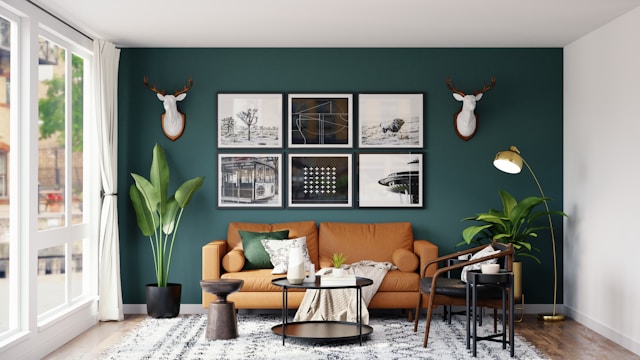
In the world of interior design, it is often the smallest details that carry the most significant weight. While the layout of your furniture and the color of your walls set the stage, it is the “vignette” that brings a room to life. A vignette is a small, intentional arrangement of objects—a curated corner that tells a story about who you are and how you live. Whether it is on a central coffee table or a functional workspace desk, these miniature displays serve as focal points that draw the eye and provide a sense of polished completion. For those looking to elevate their home without a full renovation, mastering the art of the vignette is a high-impact, low-cost solution.
The Foundation of a Great Vignette
Every successful arrangement begins with a solid foundation. On a coffee table, this often starts with a tray. Trays are the secret weapon of professional decorators because they provide “visual boundaries.” Without a tray, a collection of items can easily look like a scattered mess. By placing your objects within the confines of a tray, you signal to the brain that these items belong together.
For a desk, the foundation might be a sleek desk mat or even a large, flat coffee table book. The goal is to create a “stage” that separates your decorative items from the more utilitarian parts of the surface, such as your laptop or remote controls. This separation is what transforms a flat surface into a curated experience.
The Rule of Three and Visual Hierarchy
One of the most enduring principles of design is the “rule of three.” For reasons researchers still debate, the human eye finds odd-numbered groupings more appealing and natural than even ones. When styling a corner, aim for three items of varying heights and textures.
This leads to the concept of visual hierarchy. If every item on your coffee table is the same height, the arrangement will look flat and uninteresting. Instead, think in layers:
-
The Tall Item: This could be a slim vase with a single branch, a tall candle, or a sculptural lamp. It draws the eye upward and adds vertical interest.
-
The Medium Item: This provides the “body” of the vignette. A stack of two or three books or a small ceramic bowl works perfectly here.
-
The Small Item: This is the detail—a small brass figurine, a decorative matchbox, or a unique stone. It adds personality and fills the gaps.
Mixing Textures for Sensory Depth
To make a vignette feel high-end, you must move beyond simple color coordination and focus on texture. A room filled only with smooth, shiny surfaces can feel cold and sterile. Conversely, too many rough textures can feel disorganized. The key is balance.
If your coffee table is made of polished glass, pair it with organic textures like a wooden bowl, a woven seagrass tray, or a matte ceramic vase. On a wooden desk, introduce the sleekness of a metal pen holder or a glass paperweight. This contrast between “hard” and “soft” or “shiny” and “matte” creates a sensory depth that makes the display look professionally styled. It invites people to look closer and perhaps even reach out to touch the objects.
The Role of Books as Design Anchors
Books are the ultimate versatile tool for creating vignettes. They are not just for reading; they are structural elements. Large-format “coffee table books” are perfect for adding height and a pop of color. In a vignette, you can use a stack of books to elevate a smaller object that might otherwise get lost.
When choosing books for your display, consider the spine colors and the subject matter. They should reflect your interests—whether that’s travel, architecture, or history—as this adds a layer of authenticity to the space. On a desk, a small stack of beautiful notebooks can serve a similar purpose, acting as a base for a small desk clock or a succulent.
Bringing Life In: The Organic Element
No vignette is truly complete without something living. An organic element—often referred to as “the breath” of a display—breaks up the stillness of inanimate objects. On a coffee table, this might be a small bowl of moss, a low-growing succulent, or a vase of fresh seasonal flowers.
On a desk, where space is often at a premium, a single air plant or a small glass jar with a propagated vine can provide that necessary connection to nature. This doesn’t just look good; it also has psychological benefits, reducing stress and increasing productivity in a workspace. If you don’t have a green thumb, a high-quality “everlasting” floral arrangement or a piece of driftwood can provide a similar organic feel without the maintenance.
Personalization: Telling Your Story
While it is tempting to copy a display straight out of a catalog, the most high-impact vignettes are those that feel personal. Your home should not look like a showroom; it should look like your home. Include a “found object”—perhaps a shell from a favorite beach, a vintage compass, or a small souvenir from a meaningful trip.
These items act as conversation starters and give the room a “soul.” The trick is to be selective. A vignette is about curation, not collection. One meaningful object surrounded by beautiful, simple items will stand out far more than a crowded shelf of knick-knacks. Every piece in your curated corner should earn its place by either being beautiful, functional, or sentimental.
Maintaining the Balance Between Form and Function
It is important to remember that coffee tables and desks are functional surfaces first. A vignette that is so large it leaves no room for a coffee mug or a keyboard is a failure of design. On a coffee table, ensure there is “negative space”—empty areas where the eye can rest and where you can actually use the table.
On a desk, keep the vignette to the corners or the back edge to ensure your workflow remains uninterrupted. The best curated corners are those that enhance the use of the space rather than hindering it. If your vignette feels too cluttered, try removing one item—often, the simplest arrangements are the most powerful.
The Evolution of the Vignette
One of the joys of creating vignettes is that they are not permanent. Unlike a sofa or a dining table, a vignette can be changed in five minutes. You can update your curated corners to reflect the changing seasons—using warmer tones and candles in the winter, and bright greenery and lighter textures in the summer.
This constant evolution keeps your home feeling fresh and inspiring. It allows you to experiment with different styles and objects without a long-term commitment. By viewing your coffee table and desk as small canvases, you turn everyday organization into a form of art. Clear the clutter, choose your “stage,” and begin the process of curating a corner that brings beauty and intention into your daily life.